Don't let West Coast winter rains turn minor concrete cracks into costly headaches. Discover why autumn is the ideal window for driveway and walkway repairs.
That hairline crack in your driveway or walkway might not look like much during a dry BC summer. It’s easy to ignore when you’re busy enjoying the sunshine. But leaving those cracks open to face a wet West Coast winter is a recipe for a much bigger, far more expensive headache.
Here on Vancouver Island and the Lower Mainland, autumn is the absolute best time to tackle concrete repairs and replacements. If you have uneven slabs, deep cracks, or pooling water near your walkways, here is why you want to get them sorted out before the winter weather sets in.
1. The Sweet Spot for Concrete Curing
Concrete doesn't just "dry"—it undergoes a chemical curing process that requires moisture and moderate temperatures.
- Summer is too hot: High heat evaporates the water in the concrete mixture too quickly, which weakens the final structure and leads to surface cracking.
- Winter is too cold: If the temperature drops near freezing, the hydration process slows to a crawl or stops entirely. If wet concrete freezes, it loses up to 50% of its strength.
Fall on the coast brings the perfect goldilocks weather: consistent moderate temperatures (ideally between 10°C and 22°C) and higher humidity. This allows new concrete to cure slowly and evenly, achieving its maximum design strength.
2. Preventing the "Freeze-Thaw" Destructive Cycle
We don't get the deep, consistent freezes that the rest of Canada experiences, but our West Coast winters are actually harder on concrete in a different way. We experience a rapid "freeze-thaw" cycle.
During a typical Victoria or Langford winter, it rains heavily during the day, filling every tiny crack in your driveway with water. Overnight, the temperature dips just below freezing. Water expands by about 9% when it turns to ice. This expansion exerts incredible hydrostatic pressure inside the concrete, acting like a wedge that forces the crack wider.
When this cycle repeats dozens of times over a single winter, a minor hairline fracture can easily turn into a crumbling, structural failure by spring.
3. Addressing the Underlying Drainage Issues
Cracked concrete is often just a symptom; the real disease is usually underneath. Poor drainage, shifting subgrade, or clay soils that swell and shrink can cause concrete slabs to sink, tilt, or crack.
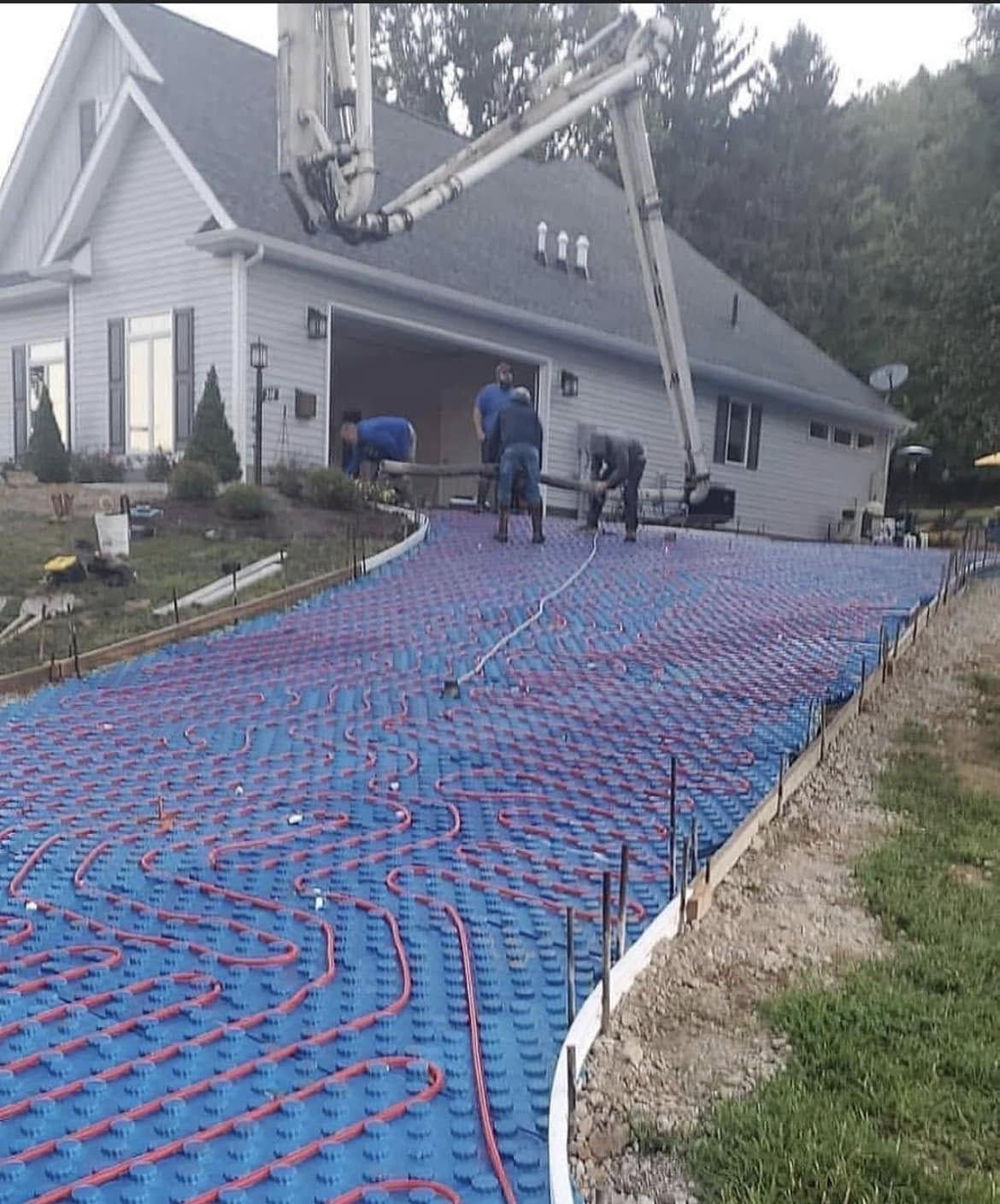
Fall is the ideal time to assess your property's drainage. If we are replacing a driveway or walkway, we don't just pour new concrete on top of the old dirt. We excavate, address the subgrade, and install proper drainage solutions—like French drains, catch basins, or run-offs—to ensure water is directed away from your concrete. Doing this excavation work in the fall, before the ground becomes completely saturated and muddy, makes for a cleaner, more efficient job.
4. Avoiding Slip and Trip Hazards Before the Dark Months
As the days get shorter and wetter, visibility drops. An uneven walkway slab that was a minor annoyance in July becomes a dangerous tripping hazard in the dark, rainy evenings of November. Furthermore, uneven concrete allows water to puddle. When overnight temperatures drop, those puddles turn into black ice, creating a major liability risk on your property.
By leveling, repairing, or replacing damaged walkways in the fall, you ensure your family, guests, and mail delivery workers have a safe, flat, and well-drained path all winter.
When to Repair vs. When to Replace
Not every cracked driveway requires a full excavation and repour. Here is a general rule of thumb:
- Repair it: If the cracks are less than 1/4-inch wide, the slabs are still perfectly level, and there is no sinking. These can often be sealed to keep water out.
- Replace it: If the concrete is spalling (the top layer is crumbling off), slabs are uneven (creating a trip hazard), or there are deep, wide cracks running across the driveway. In these cases, the sub-base has failed, and patching is only a temporary band-aid.
When to Call a Pro
If you can fit a coin into the cracks, or if one side of the crack is higher than the other, it’s time to call in an experienced contractor. Correcting settling slabs requires proper excavation equipment, knowledge of local BC Building Code requirements, and an understanding of how to prep the sub-base for our specific coastal soils.
At AV Contracting, we don’t just pour concrete; we handle the entire process from excavation and site prep to drainage installation and final finish, ensuring your new driveway or walkway stands up to the elements for decades.
Contact Char at AV Contracting at (250) 886-1112 to book your free, no-obligation driveway assessment before the winter rains arrive.
Assessments are free. Send us a photo or give us a call — we'll tell you straight whether it's a DIY fix or a job for the crew.